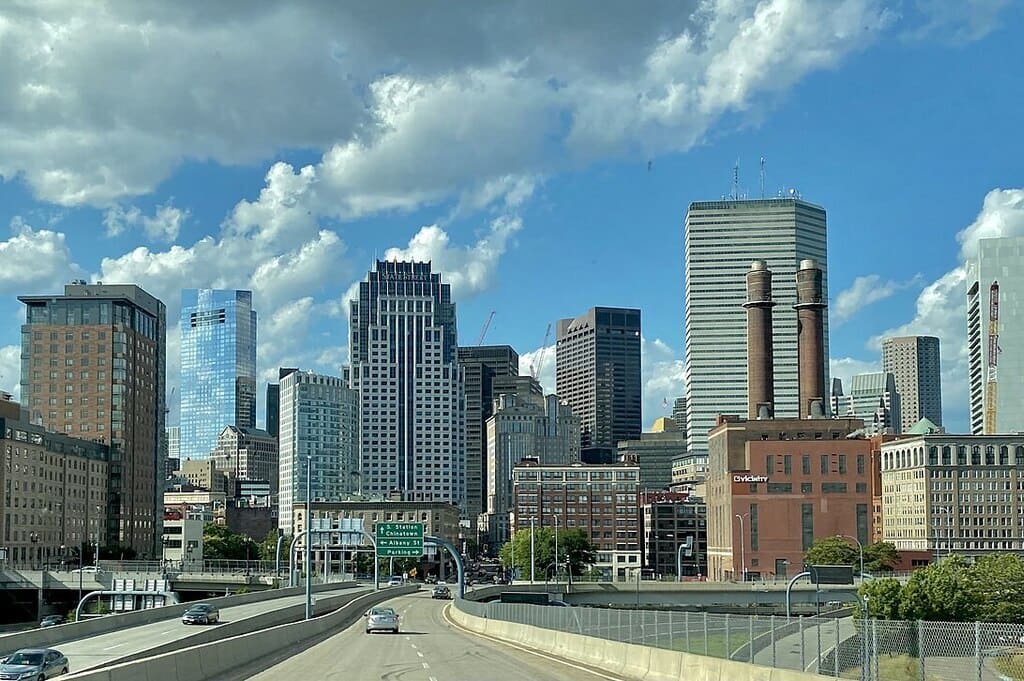
There is a six-acre stretch of land in South Boston, sitting between two Red Line stations, with approved permits for a 1.1-million-square-foot life sciences campus across the street. By almost any measure, it should be one of the most valuable undeveloped parcels in the city. On March 17, it went to foreclosure auction.
The property at 550 Dorchester Avenue — a former industrial site in the heart of one of Boston’s fastest-transforming neighborhoods — was purchased in 2022 by a joint venture led by developer Andrew Collins and backed by New York-based investors for $75 million. The timing looked smart. The Seaport was overflowing. Lab space in Kendall Square was at record rents. South Boston was the next logical destination for the life sciences expansion that had been consuming every available square foot north of the Fort Point Channel. The bet was that the market would keep moving south, and fast.
It didn’t move fast enough.
The foreclosure follows 12 active lawsuits filed against Collins-related entities totaling nearly $150 million in claimed damages — a figure that would strain even a well-capitalized developer in a good market. The suits include claims from contractors, subcontractors, and lenders across multiple projects, not just the Dorchester Avenue site. Collins’ company had been one of the more active development shops in South Boston during the 2021-2022 boom, when cheap capital and overheated demand made aggressive land acquisitions look like obvious moves. Then rates rose. Lab vacancy in Cambridge hit record highs as the post-pandemic biotech correction arrived. Tenants who had signed letters of intent in 2021 stopped returning calls. The same capital environment that made $75 million for six acres of South Boston land feel reasonable in early 2022 made it feel absurd by 2024.
The foreclosure auction itself attracted bidders — which is not always guaranteed for a distressed asset of this size and complexity. The outcome was not publicly disclosed at the time of writing, but the starting bid reflected a significant discount from the original purchase price.
What makes 550 Dorchester Avenue particularly interesting is its location. The site sits between the Andrew and Broadway MBTA Red Line stations — two stops from South Station, three from Downtown Crossing. The neighborhood around it has been transforming steadily for the better part of a decade. GE’s former Innovation Point campus at 5 Channel Center, less than half a mile north, was sold and redeveloped. Gillette’s new $1 billion global headquarters is under construction at 232 A Street, less than a mile away, and will bring 750 R&D workers to the neighborhood by 2028. The life sciences campus at Dorchester Avenue and West First Street, directly across from 550, received approvals for over a million square feet of lab and office space. The infrastructure around the site is, by any reasonable reading, exactly what a developer would want. The problem was never the location. It was the capital structure and the timing.
South Boston’s commercial real estate market tells a complicated story in 2026. On one side: the Gillette announcement, the continued Seaport expansion, and genuine long-term demand for lab and mixed-use space in a transit-connected neighborhood. On the other: a lab vacancy rate in Greater Boston that reached 26% in late 2025, a pipeline of approved projects that will take years to absorb, and interest rates that have made the math on construction financing genuinely painful for developers who levered up during the low-rate years.
The 550 Dorchester Avenue foreclosure is a case study in the second side of that story — not because the site isn’t valuable, but because the combination of aggressive acquisition pricing, rising debt costs, legal exposure, and a slower-than-expected market recovery created a situation that no amount of good location could fix. In commercial real estate, being right about the neighborhood is not enough. You also have to be right about the timing, the capital structure, and your ability to survive the gap between when you bought and when the market validates the bet.
For whoever acquires 550 Dorchester Avenue at auction — at what is almost certainly a meaningful discount from $75 million — the underlying thesis remains intact. The Red Line is still there. The Gillette campus is still being built. The life sciences demand will not permanently disappear. The question was never whether South Boston would develop. It was whether any specific developer could hold the land long enough to find out.