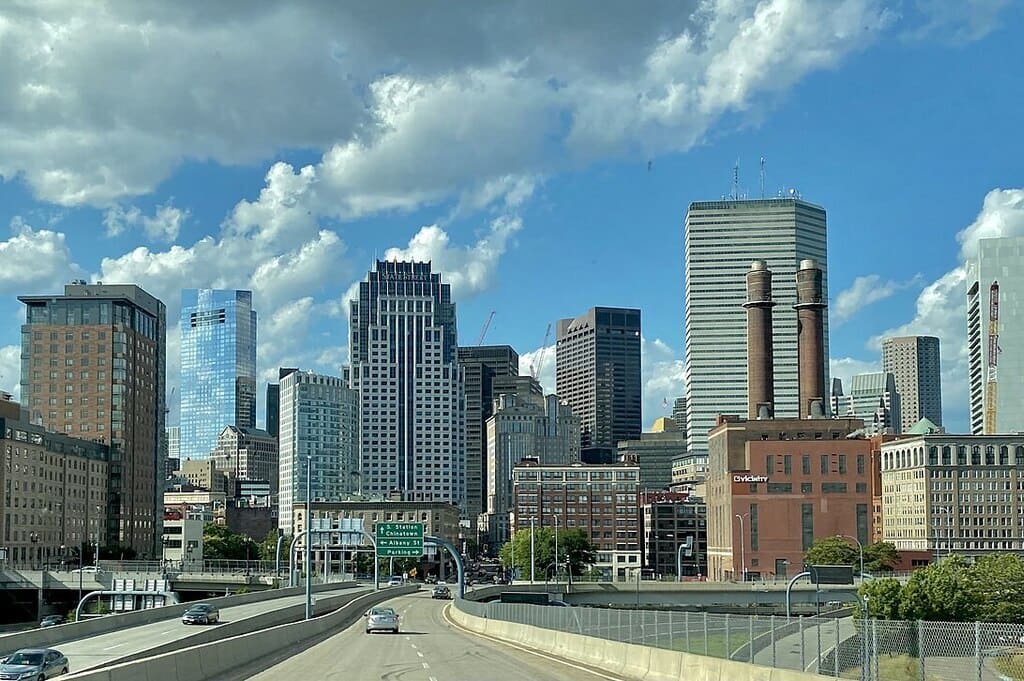
For months, it was one of the worst-kept secrets in Boston’s commercial real estate market. JPMorgan Chase had been quietly scouting a location to consolidate its four scattered downtown offices into a single, unified headquarters. The building everyone expected them to choose was South Station Tower — the 51-story glass skyscraper that opened last September above one of the busiest transit hubs in New England. This week, it became official.
America’s largest bank has signed a lease for 249,000 square feet across eight floors at South Station Tower, making it the building’s anchor tenant. The move consolidates offices from 50 Rowes Wharf, 160 Federal Street, 451 D Street, and One Liberty Square under a single roof for the first time. Approximately 700 JPMorgan employees will begin relocating to the new space in 2028, and the bank expects its Boston headcount to grow to 1,000 by 2029 — a 43% increase over its current footprint. The new office will house multiple business lines including commercial banking, wealth management, and investment banking, along with a dedicated entertainment and marketing center for the thousands of clients who will move through the building annually.
The deal is one of the largest direct office leases signed in downtown Boston in years. For a market that has spent the better part of five years staring at a vacancy rate hovering near 19% — more than double pre-pandemic levels — a commitment of this scale from one of the world’s most recognizable financial institutions carries real symbolic weight, not just square footage.
But the most striking element of JPMorgan’s arrival in Boston may not be the lease itself — it may be the sign.
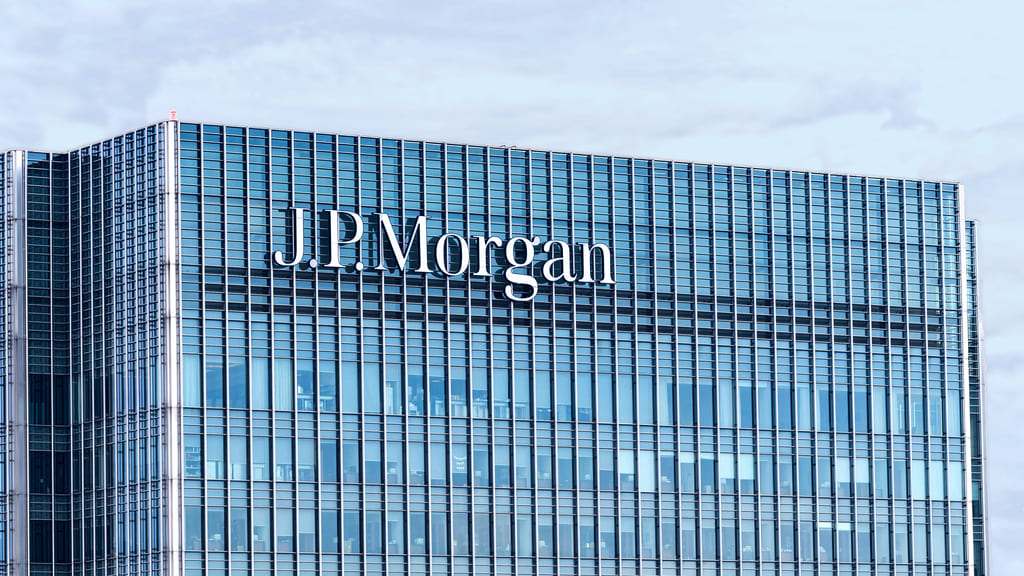
The bank has applied to mount 12-foot illuminated letters spelling “J.P. Morgan” more than 650 feet above the city, near the crown of South Station Tower. If approved, it would place JPMorgan alongside the Prudential Tower and John Hancock Tower as one of the few buildings in Boston’s skyline defined by a corporate name. The city granted provisional design approval in October 2025, and JPMorgan submitted a formal application in December. A building permit is still pending, with the bank hoping for final approval by mid-summer. In a city that has historically resisted large-scale corporate skyline branding, the application represents an unusually bold statement of permanent intent.
JPMorgan already has deep roots in Massachusetts. The bank employs 2,200 people across the state and has opened 89 retail branch locations here since 2018 — an aggressive consumer banking expansion that put Chase storefronts in cities and suburbs across eastern Massachusetts in a remarkably short window. The South Station office cements the bank’s regional presence at an institutional level, pairing its consumer footprint with a flagship commercial and wealth management hub.
The South Station Tower itself is a significant piece of Boston’s post-pandemic office story. Developed by Hines and designed by Pelli Clarke & Partners, the 51-story building includes 680,000 square feet of office space, 166 Ritz-Carlton branded luxury condominiums, and a small outdoor park on the 11th floor. Other tenants include hedge fund Citadel, law firm Jones Day, and insurer FM Global. JPMorgan’s lease — at roughly 36% of the total office footprint — transforms the building’s commercial prospects overnight.
For Rick MacDonald, JPMorgan’s New England commercial banking regional manager, the move is fundamentally about integration. Putting multiple business lines under one roof in the best new building in the market is how the bank intends to grow its Boston presence, not just maintain it.
Mayor Michelle Wu called it a direct investment in the future of downtown Boston — the kind of signal the city has been waiting for since office vacancy hit record highs and hybrid work rewrote the economics of commercial real estate across every major American city.
Whether JPMorgan’s name eventually lights up the top of South Station Tower or not, the bank’s commitment to Boston is now a matter of public record — and 249,000 square feet of signed lease.