
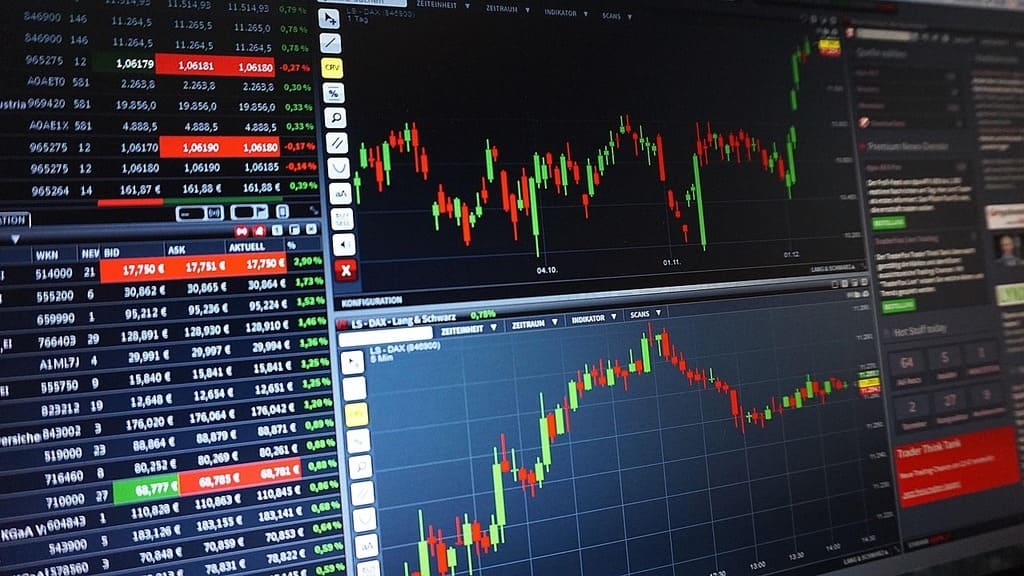
Wall Street opened Monday on shaky ground as investors scrambled to reassess their portfolios in response to a new wave of conflict in the Middle East involving Iran. The market reaction was swift and telling: energy companies surged, defense contractors rallied, while airlines, cruise operators, and luxury brands took a sharp hit.
Brent crude oil jumped as much as 13% at the open before partially pulling back, as traders weighed the risk of disruptions to one of the world’s most critical energy arteries — the Strait of Hormuz, through which roughly 20% of global oil flows. Iran has signaled it does not intend to close the waterway, but reports of halting tanker traffic in the area have kept markets on edge.
Among the biggest winners of the day, energy giants Exxon Mobil and Chevron gained in premarket trading, joined by international names like Norway’s Equinor, up as much as 10%, and Spain’s Repsol, which climbed over 8%. On the defense side, Lockheed Martin and Northrop Grumman both rose, while drone maker AeroVironment surged 12%. In Europe, BAE Systems gained more than 8% and Germany’s Rheinmetall added 6%.
The losers told the other side of the story. Delta Air Lines and American Airlines each slid around 4-5% in premarket, with European carrier IAG plunging as much as 13% — its steepest single-day drop in years. Carnival Corp. and Royal Caribbean fell approximately 6%, as higher fuel costs and potential disruptions to travel demand weighed on investor sentiment.
Gold and precious metals, traditional safe havens in times of geopolitical stress, continued their already strong year-to-date momentum. Mining stocks from North America, Australia, and Asia edged higher across the board.
S&P 500 futures fell as much as 1.8%, reflecting the broad anxiety that has gripped global equity markets, from Tokyo to London.
What This Means for Boston
Boston’s economy, heavily anchored in financial services, biotech, and higher education, is not directly in the crosshairs of energy market shocks — but it is far from immune. The city’s major institutional investors and asset managers, including those clustered along the financial corridor of the Seaport and Back Bay, will be closely monitoring portfolio exposure to energy and travel sectors throughout the week.
Local biotech and life sciences firms, which depend on complex international supply chains, may also feel indirect pressure if freight costs rise due to disruptions in Middle Eastern airspace and shipping routes. Meanwhile, Logan Airport — a key hub for transatlantic travel — could see booking softness if the conflict prolongs uncertainty around international air travel.
For Boston-area businesses, the key variable to watch remains oil prices. A sustained spike above $100 per barrel would translate into higher operating costs across industries, from logistics to retail — a reminder that even in a tech-driven economy, geopolitics still move the needle.