
Fifty million dollars is a serious amount of money for a company that started as a vaccine project in Harvard’s Innovation Lab. But then again, Ozempic is a serious amount of market — and Terrestrial Bio, the Boston-based company that just closed a $50 million Series C round, is betting it has figured out something the entire GLP-1 industry needs and nobody has delivered yet: a way to take semaglutide without a needle.
The company was founded in 2012 as Vaxess Technologies by four Harvard graduate students — Michael Schrader, Livio Valenti, Kathryn Kosuda, and Patrick Ho — working on technology originally developed at Tufts University by professors Fiorenzo Omenetto and David Kaplan. The core invention was a silk-derived protein called fibroin that could stabilize vaccines at room temperature, eliminating the cold chain requirements that make vaccine distribution in low-resource settings so difficult. For the first decade of its life, Vaxess was a vaccine company. It ran Phase 1 clinical trials for a flu vaccine patch, became the first company in the world to complete a Phase 1 trial of a sustained-release dissolvable vaccine patch, and signed a collaboration with AstraZeneca for mRNA vaccine delivery.
Then GLP-1 drugs happened to the world, and Vaxess paid attention.
The pivot started in late 2024, when the company — then under new CEO Rachel Sha, a Sanofi veteran who joined in May 2024 after Schrader departed to start a new company — announced a collaboration with Novo Nordisk, the Danish manufacturer of Ozempic and Wegovy, to evaluate its patch for GLP-1 delivery. The logic was straightforward: semaglutide works. Patients know it works. The problem is the weekly subcutaneous injection that comes with it — a needle that a meaningful percentage of patients find painful, inconvenient, or psychologically difficult to self-administer consistently. In a human factors study the company ran with participants simulating GLP-1 patch use, 95% said they preferred the patch over needles for ease and comfort. That is not a marginal preference. That is a product signal.
The technology Terrestrial Bio uses is its MIMIX microarray patch — a small device with dissolvable tips made from silk fibroin biomaterials that penetrate the outer skin layer and gradually release their payload into the dermal tissue over time. The tips dissolve completely after the patch is removed. No sharps waste. No refrigeration required. No injection site reactions. And critically, in preclinical studies in Göttingen minipigs — the standard model for intradermal drug delivery — the patch delivered semaglutide at a clinically relevant dose with bioavailability comparable to subcutaneous injection, hitting a modestly higher peak concentration with a similar half-life profile. The data was presented at the American Diabetes Association’s 85th Scientific Sessions in June 2025, and Sha described the results as “quite impressive.”
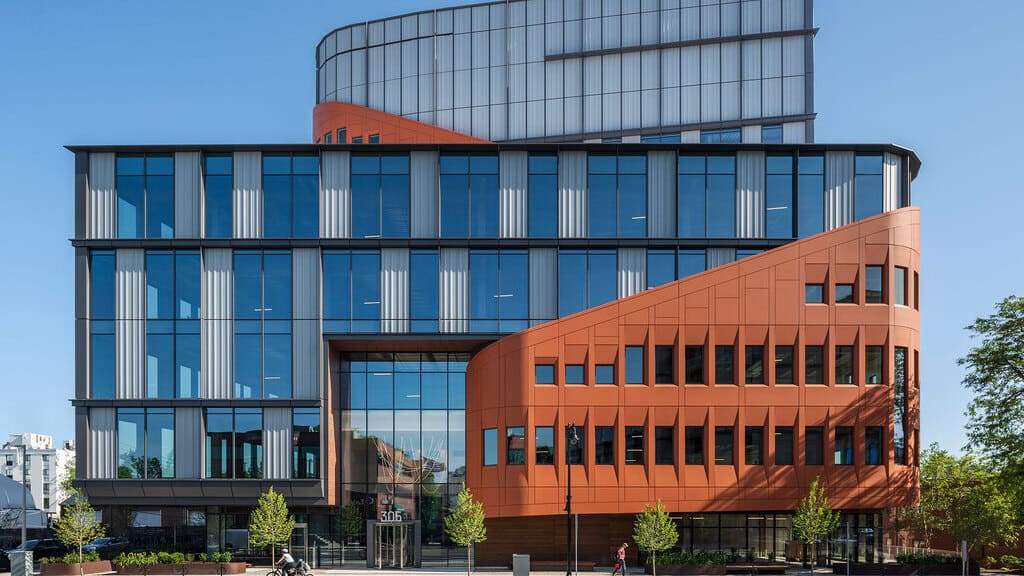
The $50 million Series C was led by RA Capital Management, the Boston-based healthcare investment firm that has backed some of the more interesting drug delivery companies in the country, with additional participation from Engine Ventures, GHIC, and SiteGround. Total funding raised by the company across its thirteen-year history now approaches $150 million, including venture capital and federal grants from the NIH, NIDDK, and other agencies. The round closes simultaneously with a new lease at Allston Labworks — a facility of more than 40,000 square feet that will house the company’s expanded manufacturing operations and new headquarters, incorporating automation, robotics, computer vision, and quality control systems designed to support late-stage clinical development and early commercial production.
The rebrand from Vaxess to Terrestrial Bio is more than cosmetic. The original name was tied to the vaccine platform that defined the company’s first decade. The new name, as Sha explained, reflects two things: the company’s focus on therapies delivered at the body’s surface — the skin — and an ambition to make those therapies accessible to patients everywhere, not just in well-resourced clinical settings. Healthcare, she noted, has become increasingly consumerized. Patients choose treatments partly on experience, comfort, and convenience. A patch that delivers the same drug as a weekly injection, without the needle, without the cold storage, and with the ability to self-apply at home, is a different product category — even if the molecule inside is identical.
The GLP-1 patch market is not without competition. Anodyne Nanotech, another Cambridge-based startup, is working on a similar concept and hopes to begin human testing by 2027. Micron Biomedical in Atlanta raised $16 million for its own microarray patch platform. The Australian company Vaxxas — which sounds almost identical to the old Vaxess name — runs a competing approach from a Cambridge outpost. Bruce Booth at Atlas Venture, who is not an investor in any of these companies, put the competitive reality plainly: needle-free drug delivery is “certainly a nut many are trying to crack.”
Terrestrial Bio’s advantage is thirteen years of manufacturing experience with this specific platform, a completed Phase 1 human trial, a signed collaboration with the maker of the world’s most prescribed GLP-1 drug, and now $50 million to build the facility that takes it from preclinical data to clinical trials to, if the data holds, a commercial product.
The weekly injection is not going away tomorrow. But someone is going to replace it eventually. Boston has placed its bet on who that will be.