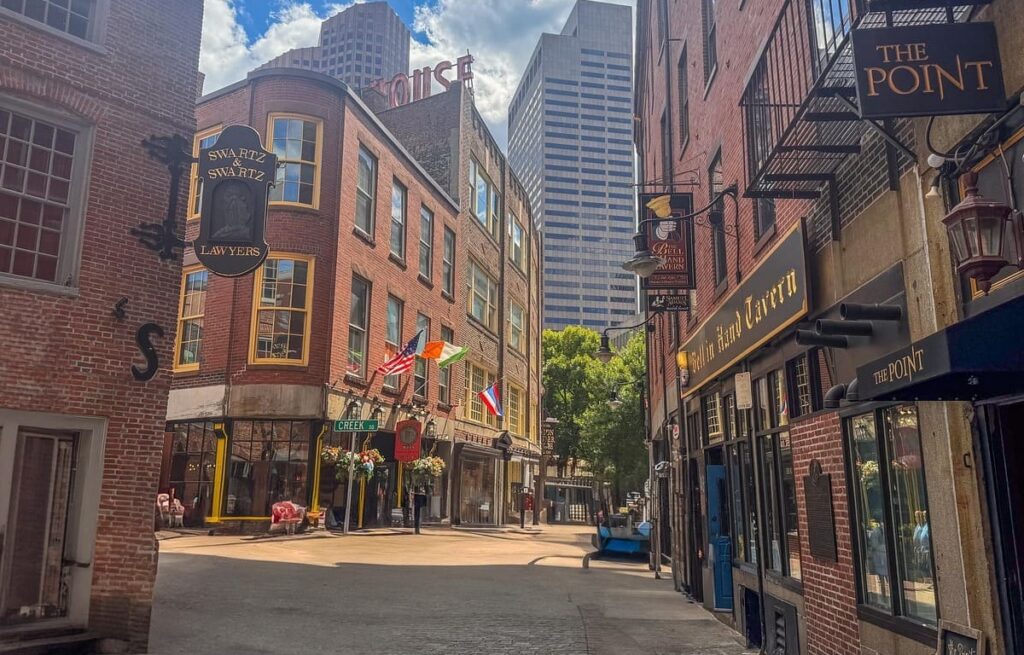

Boston has evolved from being solely the cradle of American independence to becoming the laboratory for digital financial independence. Businesses, both small and large, must adapt to this new reality—it is no longer optional for those who truly wish to prosper. Implementing new technologies and achieving real leverage through them is now a matter of survival.
In 2026, the capital of Massachusetts is not only competing with major financial hubs like New York in terms of assets under management (AUM) but is also leading the technical integration of these assets into the real economy. With local giants such as State Street (with $49 trillion in assets under custody) and Fidelity doubling down on blockchain infrastructure, the city’s investment landscape has entered a phase of unprecedented maturity.
In this article, we will analyze Boston’s financial landscape in relation to emerging technologies and how local companies can benefit from their full potential.
Fintech Integration in Traditional Banking: The “Boston Model”
Unlike other financial hubs that viewed Fintech as a threat, Boston has perfected a model of symbiotic collaboration. The city’s “TradFi” (Traditional Finance) institutions are actively absorbing the capabilities of local startups to modernize their core services.
The Shift Toward Institutional Tokenization
According to the 2025 Digital Assets Outlook report published by State Street in Boston, the majority of institutional investors expect to double their exposure to digital assets over the next three years. This is not about speculation with volatile cryptocurrencies; it is about the tokenization of Real-World Assets (RWA). These assets, represented on the blockchain, can range from stocks to real estate properties that can be fractionalized. This new concept allows small businesses in Boston to build highly diversified investment portfolios without the need for massive capital outlays.
-
Key Data: Nearly 40% of financial institutions in Boston already have a business unit dedicated exclusively to digital assets.
-
Cost Impact: The integration of Distributed Ledger Technology (DLT) in local traditional banking is enabling projected operational savings of up to 40%, thanks to transparency and automated reconciliation.
Banking as a Platform (BaaP)
Local banks with a presence in the Boston area are adopting Fintech APIs to allow their corporate clients to manage tokenized deposits and digital securities directly from their standard banking interfaces, effectively eliminating friction between fiat and digital currency.
Stablecoins: The New Engine for International Trade in Massachusetts
One of the most drastic shifts in 2025 and early 2026 has been the mass adoption of stablecoins for cross-border B2B transactions. In case you didn’t know, a stablecoin is a cryptocurrency whose value is directly pegged to the price of a fiat currency (such as the Dollar or the Euro) or other assets like gold or silver. Boston, functioning as both a major logistics port and a global services hub, has become the ideal stage for this deployment.
Efficiency in Cross-Border Payments
The use of stablecoins—especially those pegged to the dollar like USDC, issued by Circle (which is headquartered right here in Boston)—has revolutionized settlement times. But why is using stablecoins such a great idea for Boston businesses? These two points are key (though they are not the only ones):
-
Speed: Tech companies in the Innovation District exporting software to Europe or Asia have slashed their payment reception times from 3-5 business days to less than 10 minutes. The same applies to local firms purchasing raw materials or supplies from overseas.
-
Costs: While traditional correspondent banking networks impose fees ranging from 3% to 5%, commercial transactions using stablecoins in Boston are operating with costs below 0.5%.
The Rise of “On-Chain Treasury”
Mid-cap companies across Massachusetts are beginning to hold a fraction of their reserves in regulated stablecoins. This allows them to execute instant international payments outside of traditional banking hours (Wire 365), optimizing their cash flow and avoiding exposure to traditional currency volatility during weekends.
Regulatory Framework: Massachusetts as an Innovation “Sandbox”
Under Governor Maura Healey’s administration, the state has sought to balance investor protection with economic competitiveness. In 2025, initiatives were launched to overhaul financial regulations and eliminate obsolete bureaucratic hurdles—such as the submission of files in physical formats. These moves favor the total digitalization of money transmitter licenses, directly benefiting crypto-focused enterprises.
Conclusion: Leading the Charge into the Digital Frontier
As we look toward the remainder of 2026, it is clear that Boston’s financial landscape is no longer just about historic brick-and-mortar institutions; it is about the seamless fusion of tradition and digital ingenuity. The transition toward tokenized assets and the mass adoption of stablecoins are not merely technical upgrades—they represent a fundamental shift in how local businesses build wealth, manage risk, and compete on a global stage.
For the Boston business community, the message is one of immense opportunity. By embracing these “On Market” innovations, from fractionalized real estate to instant cross-border settlements, the city is fostering an ecosystem that is more inclusive, efficient, and resilient than ever before. While the technology continues to evolve, the core mission remains the same: leveraging the best tools available to drive prosperity in the place we call home.
Whether you are a startup founder in the Innovation District or a seasoned investor in the Financial District, the digital era of finance is here to stay. Boston has successfully laid the groundwork; now, it is up to us to build the future upon it. At OnMarketBoston, we will continue to track every pulse of this transformation, ensuring you stay at the forefront of the most exciting chapter in our city’s economic history.