Something unexpected happened in the middle of 2025. While the Trump administration was cutting $27 billion from federal rental assistance programs and proposing the elimination of the Department of Housing and Urban Development as most people know it, Congress quietly did something that developers of affordable housing had been waiting years for: it made the Low-Income Housing Tax Credit significantly more generous.
The change came buried inside the One Big Beautiful Bill Act, signed into law in July 2025. Two specific provisions are already reshaping how developers in Boston and across Massachusetts think about affordable housing projects. The first: a permanent 12% increase in the amount of 9% LIHTC credits each state receives annually. The second — and arguably more consequential — a reduction in the private-activity bond financing requirement for 4% credit projects from 50% to 25%. That second change unlocks a category of rehabilitation and adaptive reuse projects that were previously financially impossible to pencil out.
Taken together, the two changes represent the largest expansion of the LIHTC program in decades. Novogradac, the accounting firm that tracks affordable housing finance most closely, estimates the expansion could finance roughly 1.22 million additional affordable rental homes nationally between 2026 and 2035. For Massachusetts — a state where the gap between housing supply and housing need is among the most acute in the country — the implications are immediate and practical.
The on-the-ground evidence arrived in February 2026, when Governor Healey announced $140 million in new affordable housing awards across Massachusetts, combining federal and state LIHTC allocations with subsidy funds from the Executive Office of Housing and Livable Communities. The announcement funded 1,008 homes statewide — 903 of them affordable, 284 reserved for extremely low-income households and people transitioning out of homelessness. The awards covered 15 developments across Beverly, Boston, Chelsea, Fitchburg, New Bedford, Pittsfield, Springfield, and Worcester.
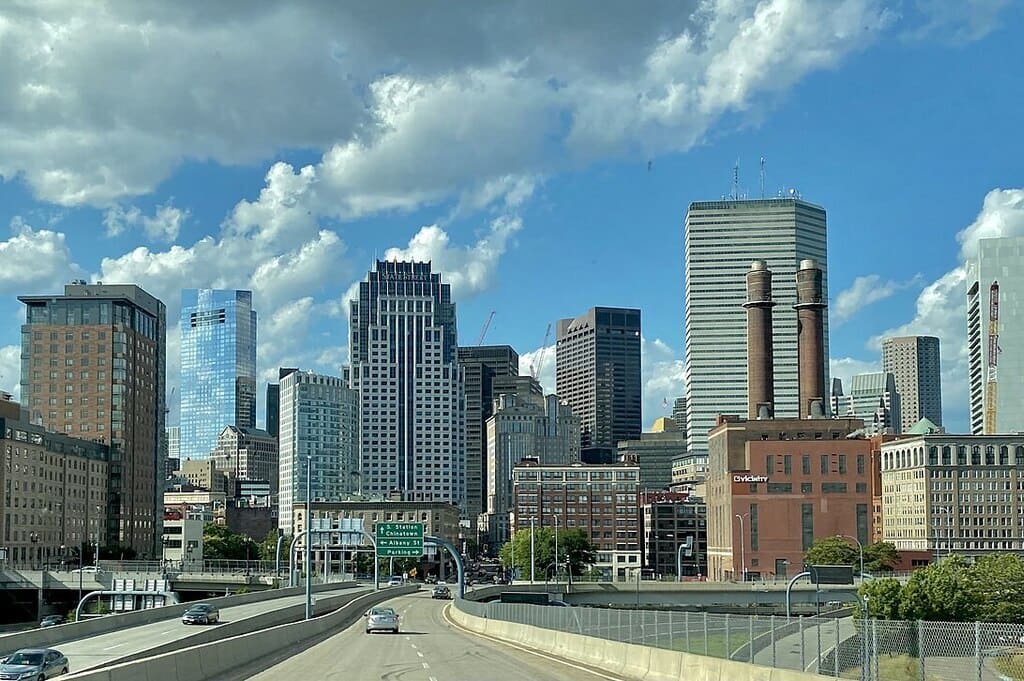
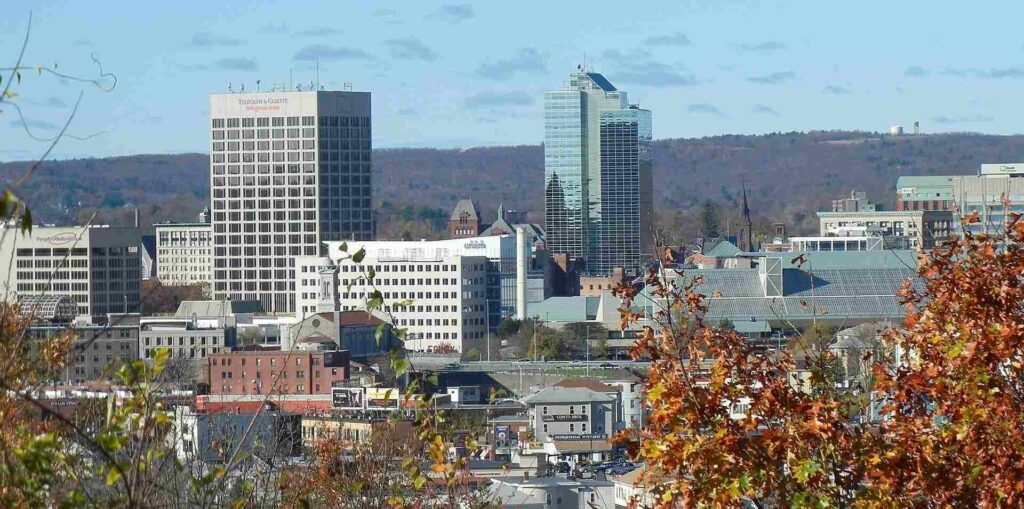
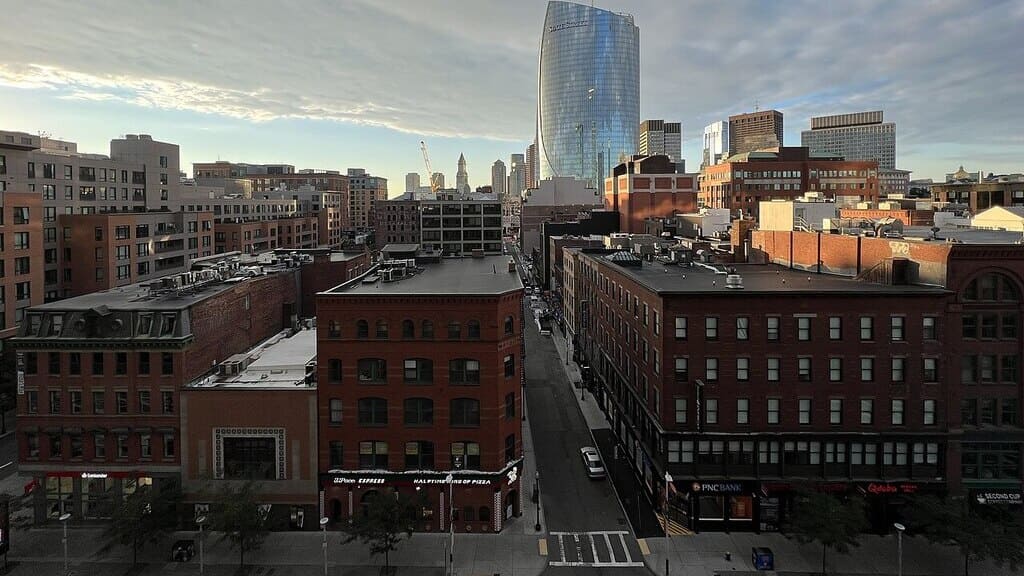
Embedded in the February announcement was a new program that tells you where Massachusetts housing policy is heading: Commercial Conversion Tax Credits. Five projects in Boston, Fitchburg, New Bedford, Pittsfield, and Worcester received awards to convert vacant downtown commercial buildings into residential housing. In Boston’s Financial District, a historic office building at 150 Milk Street is being converted into 18 homes with street-level commercial space. In downtown Worcester, One Chestnut — a historic office building — received $3.6 million to create 198 rental units. In Fitchburg, the Main Street Lofts project converts a vacant historic office building into 35 homes with ground-floor retail.
The commercial conversion angle matters for a specific reason. Greater Boston’s office market ended 2025 with a vacancy rate approaching 19% — more than double pre-pandemic levels, with downtown Boston carrying particular pain. Converting those empty buildings into housing kills two problems at once: it removes distressed commercial assets from balance sheets that are dragging down property tax revenues, and it adds residential units in transit-connected locations that already have the infrastructure — water, sewer, transit access, street-level commercial — that new construction sites often lack.
The federal LIHTC expansion makes those conversions more financially viable than they were twelve months ago. Under the old 50% bond financing threshold, a developer converting a mid-sized historic office building in downtown Boston needed to finance half of total project costs with tax-exempt bonds before qualifying for the 4% credit. That requirement alone killed dozens of otherwise viable projects. At 25%, the same project becomes buildable. WinnCompanies, one of the country’s largest affordable housing operators and a major Massachusetts player, is already deploying this math at Mission Main — a 535-unit rehabilitation in Boston’s Mission Hill neighborhood, combining federal and state tax credits with city and state subsidy in a capital stack that would have been much harder to assemble a year ago.
The timing is genuinely complicated, though. The same federal government that expanded the LIHTC also proposed a $27 billion cut to Section 8 voucher programs. The expansion of supply-side credits alongside the contraction of demand-side rental assistance is not a contradiction that resolves itself neatly. A newly built affordable unit is only affordable to its residents if those residents can actually pay the rent — and for the lowest-income households, that math often depends on a voucher the federal government is now threatening to cut.
For Boston specifically, the housing shortage is severe enough that developers will take whatever tool is available. The city adds roughly two housing units per 1,000 residents per year — one of the lowest rates of any major American city. The Affordable Homes Act passed by the Healey administration in 2024 set a target of 222,000 new units by 2035 across Massachusetts. Against that target, 1,008 units in February is a start — not a solution. But after years of watching deals fall apart because the financing didn’t work, the developers who specialize in affordable housing in Boston are, for the first time in a while, seeing a window opening.
Whether it stays open long enough to matter is a different question.