
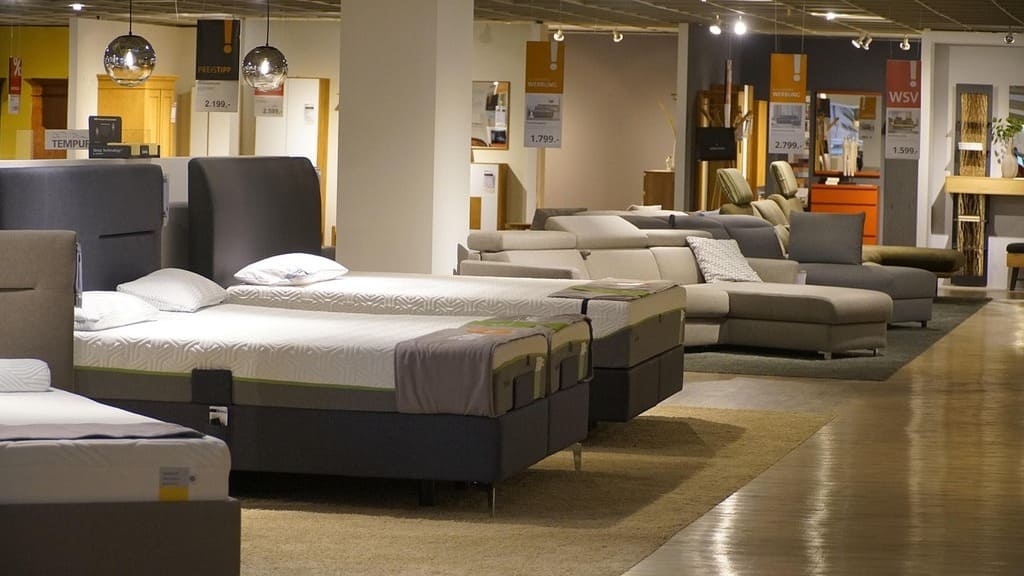
There is something quietly sad about watching a furniture store get auctioned off piece by piece. A sofa that someone spent weeks choosing. A desk that sat in a showroom for months waiting for the right buyer. Staging artwork that dressed up windows in eight different Massachusetts towns. For Circle Furniture — a retailer that spent more than seven decades furnishing New England homes — that is exactly what comes next. Let’s see how one of Boston’s most emblematic businesses is forced to auction off all its assets.
Paul E. Spaerstein Co. Auctioneers & Appraisers is hosting a series of online auctions across Circle’s locations and warehouse between March 19 and April 29, with bidding already open at select sites. Couches, cabinets, desks, ceramic wall planters, and showroom decor are all on the block — the physical remnants of a business that, until a few months ago, many Bostonians considered a reliable neighborhood institution.
The collapse came fast and hard. Circle Furniture shuttered abruptly at the end of December, laying off all 65 of its employees almost immediately. The timing was brutal — the holiday season, when furniture retailers typically count on strong sales to close out the year. Instead, customers who had paid deposits on custom orders were left in limbo, their furniture undelivered and their money tied up in a company that was already in freefall.
The bankruptcy filing in late January revealed a stark mismatch: roughly $2.27 million in assets against nearly $14 million in liabilities. Hundreds of customers who had put down deposits on furniture were listed as creditors — people who trusted the brand, handed over their money, and are now at the back of a very long line.
The story of how Circle got here is one of ambitious expansion meeting an unforgiving retail environment. Robert and Paula Richard acquired the company in 2022 — taking over a brand with a 70-year history founded by Robert and Freda Tubman in 1952 — and moved quickly to grow it. New locations in Boston’s Seaport district and Portsmouth, New Hampshire. A Hyannis store that opened as recently as last May. Eight locations in total, spread across Massachusetts and New Hampshire, plus a warehouse in Acton.
It is a familiar pattern in retail: a legacy brand changes hands, new ownership sees untapped potential, expands aggressively, and discovers too late that the economics of physical retail — particularly in the premium furniture segment — do not reward ambition as generously as the business plan suggested. The Seaport store, with its premium rent in one of Boston’s most expensive commercial corridors, almost certainly did not help the bottom line.
Circle was not alone in struggling. The American furniture retail sector has faced sustained pressure from a combination of forces: shifting consumer habits toward online purchasing, supply chain disruptions that eroded margins and customer trust during the pandemic years, and a housing market that — despite high prices — has seen transaction volumes slow significantly as mortgage rates climbed. When people aren’t moving, they aren’t buying furniture. It is that simple and that brutal.
What remains now is the inventory, the locations, and the memories of the customers who over the years found a dining table, a bedroom set, or a living room sofa that they still have in their homes today. Circle Furniture lasted 70 years in a business where most retailers don’t make it to ten. That counts for something — even if the final chapter is an auction listing and a bankruptcy court filing.