
While most of Wall Street was still digesting the weekend business news, Vertex Pharmaceuticals dropped a clinical data release that sent its stock jumping more than 6% in premarket trading. The reason: povetacicept, the company’s experimental drug for a serious and poorly treated kidney disease, just hit its primary endpoint in a Phase 3 trial — and the numbers were not just statistically significant. They were, by any clinical measure, striking.
The trial in question is called RAINIER, a global Phase 3 study evaluating povetacicept in patients with IgA nephropathy — a progressive kidney disease caused by abnormal immune deposits that gradually destroy kidney function and, in many cases, leads to end-stage renal failure. It is a condition that affects an estimated 130,000 to 150,000 people in the United States alone, and until recently, treatment options were limited largely to managing symptoms rather than addressing the underlying immunological mechanism driving the damage.
We’re excited to share positive topline results from the interim analysis of the RAINIER Phase 3 study of our investigational therapy for #IgANephropathy. Learn more: https://t.co/1bgWKtIJiq pic.twitter.com/hPOtYG3dYY
— Vertex Pharmaceuticals (@VertexPharma) March 9, 2026
In the interim analysis population, patients treated with povetacicept achieved a 52.0% reduction from baseline in the urine protein-to-creatinine ratio at week 36, with a 49.8% reduction compared to placebo — a result that was both statistically significant and clinically meaningful, with a p-value below 0.0001. For context, the UPCR is the primary marker clinicians use to track kidney damage progression. A reduction of nearly 50% compared to placebo is not a modest effect — it is the kind of signal that changes treatment paradigms.
The secondary endpoint told an equally compelling story: povetacicept drove a 77.4% reduction from baseline in serum Gd-IgA1 — the specific antibody subtype that triggers the immune cascade underlying IgA nephropathy — representing a 79.3% reduction versus placebo. That figure matters because it suggests the drug is not just managing the downstream effects of the disease, but suppressing the upstream immunological process causing it in the first place.
The safety profile held up as well. Serious adverse events occurred in just 3.0% of povetacicept patients compared to 4.3% in the placebo group, with injection site reactions — all mild to moderate and non-serious — representing the most notable treatment-specific finding.
What comes next moves quickly. The FDA has granted Rolling Review for povetacicept’s Biologics License Application, Vertex has already submitted several modules, and the company plans to complete the full BLA submission by the end of March — using a Priority Review Voucher to compress the standard ten-month review timeline to six months. A potential approval decision could come before the end of 2026.
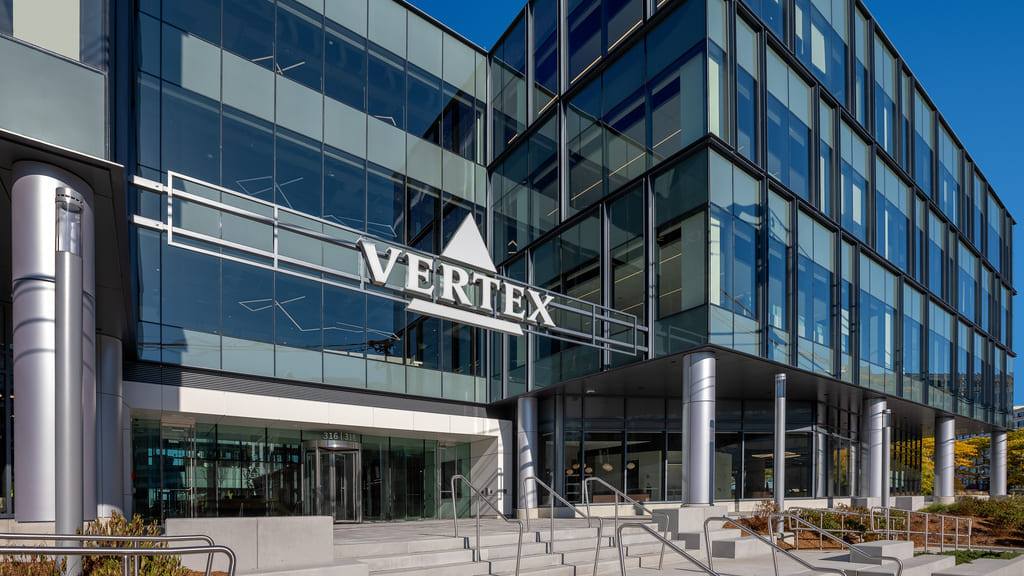
For Boston’s biotech ecosystem, the significance of this moment extends well beyond a single drug approval. Vertex — headquartered in the Seaport district — has spent the past decade methodically expanding beyond its cystic fibrosis franchise into pain, kidney disease, and autoimmune conditions. Each success reinforces the case that Boston’s model of building deeply specialized, science-first pharmaceutical companies produces durable results that platform-agnostic competitors struggle to replicate.
The city that gave the world Moderna’s mRNA vaccine and Alnylam’s RNA interference platform may be about to add another chapter: the first dual BAFF+APRIL inhibitor approved for a kidney disease that has waited decades for a real answer.