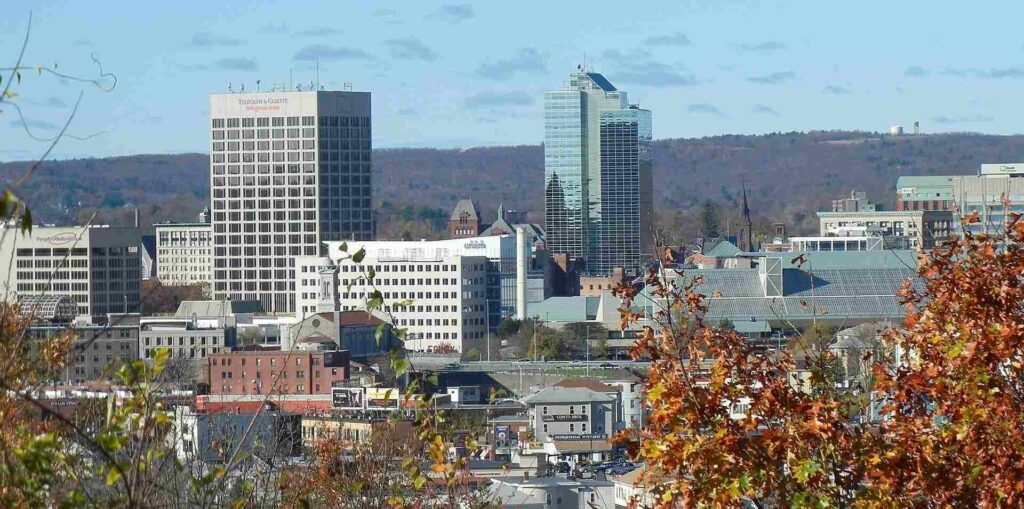
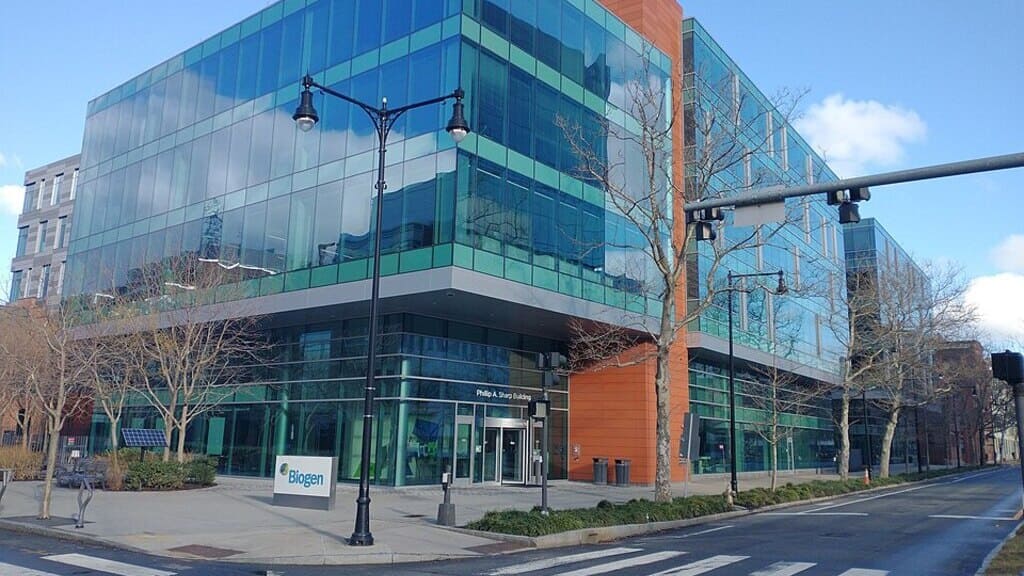
Cambridge-based Biogen announced it will acquire Apellis Pharmaceuticals, headquartered in Waltham, in an all-cash deal worth approximately $5.6 billion — or $41 per share. When Apellis stock closed on Monday, it was trading at roughly half that. By Tuesday morning, shares had more than doubled overnight. That kind of move tells you something about what Biogen was really buying.
Apellis is not a typical acquisition target. Founded in 2009 by Cedric Francois and Pascal Deschatelets, the company spent the better part of a decade building treatments around a corner of immune biology that most large pharmaceutical companies had largely avoided — the complement system, a cascade of proteins that forms part of the body’s innate immune response and, when dysregulated, drives the destruction of healthy tissue in conditions ranging from rare blood disorders to devastating eye diseases. The science was compelling. The commercial path was not obvious. Apellis spent years in clinical development, survived an aborted IPO attempt in 2016, and navigated a safety scare in 2023 that briefly caused significant stock volatility just as its flagship product was launching.
That flagship product is Syfovre — the first and only FDA-approved treatment for geographic atrophy, an advanced form of age-related macular degeneration that causes progressive, irreversible destruction of the retinal cells responsible for central vision. Before Syfovre’s February 2023 approval, there were no treatments for geographic atrophy at all. None. Over one million Americans and five million people worldwide had the condition with zero approved options. On average, it takes just two and a half years from diagnosis for the lesions to reach the fovea — the part of the retina responsible for reading, recognizing faces, and most of daily visual function. Apellis built the drug that finally addresses it, and it works: in Phase 3 trials, monthly injections slowed lesion growth by 22% at 24 months, with the effect increasing over time. Syfovre generated $587 million in sales in 2025 alone, growing at a mid-to-high-teens annual rate.
Biogen also gets Empaveli, the second Apellis commercial product, approved for a rare and life-threatening blood disorder called paroxysmal nocturnal hemoglobinuria. Empaveli added $102 million in 2025 revenue, and in July 2025 received expanded FDA approval for two rare kidney diseases — C3 glomerulopathy and IC-MPGN — opening what analysts estimate as a potentially $1 billion addressable market in nephrology. That kidney expansion is at the center of why Biogen’s CEO Chris Viehbacher wanted this deal. Biogen’s roots are in neurology — multiple sclerosis, Alzheimer’s disease, spinal muscular atrophy. Apellis gives it a foothold in immunology and nephrology with two already-approved drugs that are early in their commercial lifecycles, not late ones.
The timing reflects Biogen’s specific situation. The company reported $9.9 billion in 2025 revenue, its first annual increase since 2019. But it had already forecast a decline in 2026 to a range of $9.3 to $9.5 billion, and its most promising pipeline assets — spread across neurology, immunology, and rare disease — are unlikely to contribute meaningfully to growth until around 2028. Viehbacher told analysts Tuesday that he didn’t want to absorb more Phase 3 clinical risk right now. He wanted commercial assets. Apellis has exactly that: two approved drugs, a 740-person team with deep operational expertise, a partner in Sobi handling Empaveli commercialization outside the United States, and a revenue base growing fast enough to be accretive to Biogen’s earnings starting in 2027.
The deal is subject to regulatory approval and is expected to close in the second half of 2026. Biogen said it expects a significant portion of Apellis’s employees to remain with the combined company after integration.
For the Greater Boston biotech corridor — already absorbing the shock of Takeda’s latest round of Cambridge layoffs announced the same week — the Biogen-Apellis deal is the kind of counterweight the ecosystem occasionally needs. It is the region’s largest pharma acquisition of the year so far, and a reminder that for all the noise around lab vacancies and post-pandemic corrections, the underlying science being built in Waltham and Cambridge still commands premium valuations from the companies best positioned to capitalize on it.